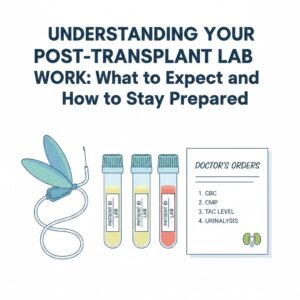
One of the biggest surprises after a kidney transplant is just how much time you’ll spend getting bloodwork done. Lab testing becomes a regular part of life, and while the specific tests vary from person to person, most transplant recipients fall into two broad categories of routine monitoring.
The Core Tests Most Transplant Patients See
For me, the “usual suspects” include:
- Tacrolimus (Tacro) levels – to make sure my anti‑rejection medication is in the right range
- CBC with Differential – a hematology and coagulation panel that checks things like white blood cells, red blood cells, and platelets
- Renal Panel – to keep an eye on kidney function and electrolytes
Over the years, I’ve also had additional tests like BK virus, Epstein‑Barr, and glucose tolerance screenings. And no, despite the name, BK has nothing to do with Burger King—so your Whopper is safe.
What Actually Happens at the Lab
My part in the process is pretty straightforward: show up, get my blood drawn, and go home. The lab handles the testing, and my transplant team interprets the results. I don’t need to understand every number on the report—that’s what the specialists are for. My job is simply to be consistent.
One habit that has saved me more than once is keeping my own copy of lab orders. Most people rely on the clinic to send them electronically, but when a computer system decides to take a day off, having a paper copy in hand keeps everything moving.
Important Prep: Medications and Fasting
Not all lab tests are “come as you are.” Some require fasting, and others can’t be drawn if you’ve taken certain medications beforehand. Your transplant team will give you specific instructions, and it’s crucial to follow them closely. Missing a dose or taking one too early can throw off results and lead to unnecessary repeat testing.
How Often Will You Need Labs?
The frequency of lab work changes over time. In the beginning, it can feel intense:
- Twice a week during the first month
- Weekly as things stabilize
- Every two weeks, then monthly once your numbers look steady
- Then, depending on many factors – your labs might even change to once every two or even three months
- Specials, it is not uncommon that after a test, your doctors might request a retest with in the next 7 to 14 days with or without a medicine dosage change.
In my case, complications kept me on monthly labs longer than expected. After a serious infection, I even returned to weekly draws for a while. Thankfully, a home healthcare nurse handled those visits, sparing me the hospital trips.
The Best Mindset: Stay Flexible
If there’s one thing I’ve learned, it’s that lab schedules are unpredictable. They shift based on your health, your medications, and sometimes just because your doctor wants to double‑check something.
The healthiest approach? Don’t stress—adapt. Flexibility is one of the most valuable skills you can develop in post‑transplant life.